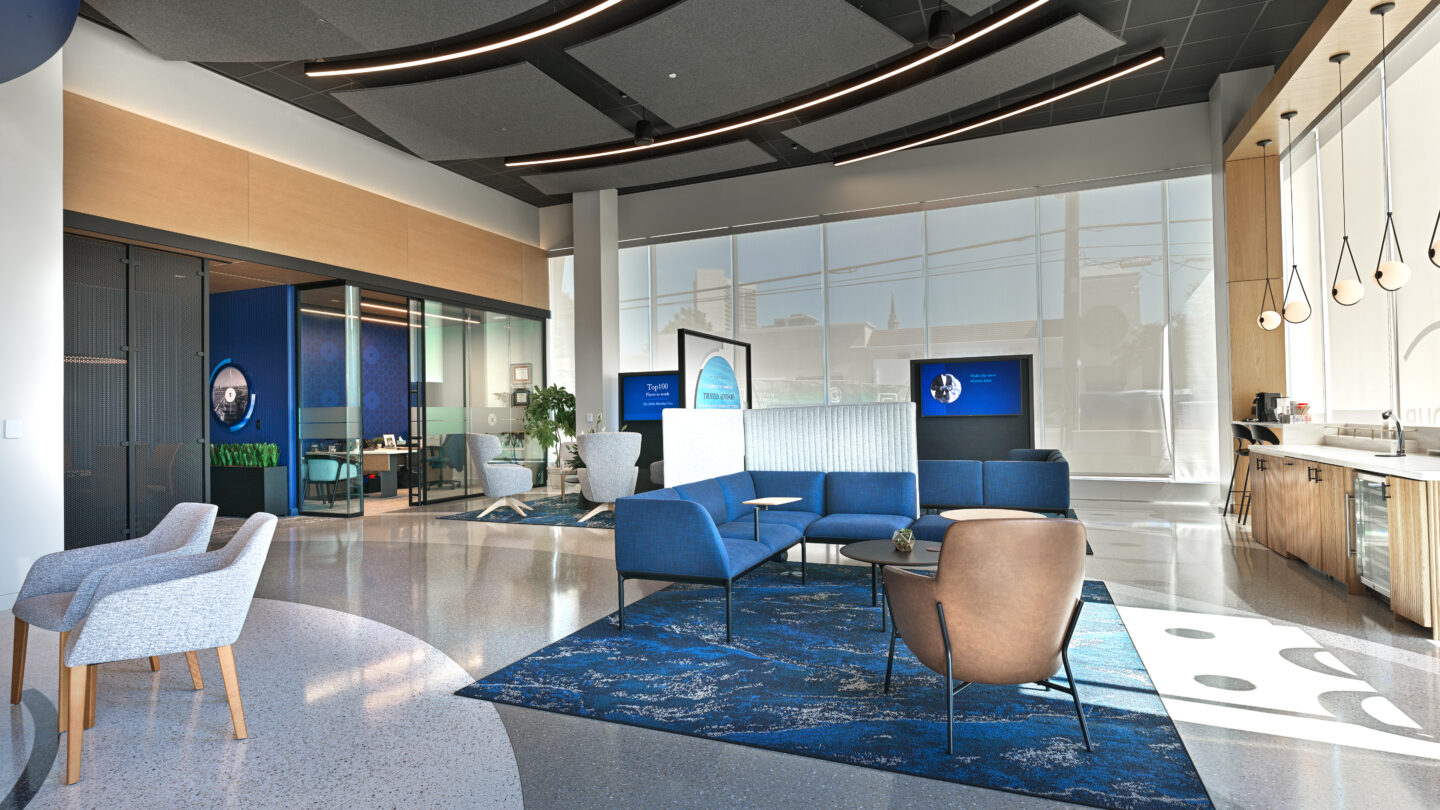
As the built environment evolves to meet rising demands and emerging expectations, the American Institute of Architects (AIA) 2025 Conference on Architecture and Design spotlights how the design of environments is shifting – strategically and sustainably. An event held annually for architecture and design leaders, the conference serves as a launchpad for the field’s freshest thinking. “Over four dynamic days, attendees experienced immersive learning, inspiring keynotes, architect-led tours, high-impact networking, and the industry’s largest expo,” according to AIA. “All designed to spark real-time innovation and engagement.”
From packed seminars to a bustling expo floor, the conference hosted nearly 13,000 attendees from across the globe and featured 600 leading brands in the architecture, engineering, and construction (AEC) industry. With thinking at the leading edge of the profession, the event demonstrates how design goes beyond form and function, into a people-first purpose – a thread that ran across the content and conversations at the conference. Coupled with our own experiences, the Adrenaline team came away from AIA25 with five trends that are reshaping the future of design and construction and specifically impacting financial services spaces.
Trend #1: Sustainability Goes Strategic
Sustainability in space design is not just a buzzword in architecture, it’s a unifying vision. From the conference, it’s clear the industry is moving from intention to action with implementation happening at all levels. “As a design group, we’re working towards creating a sustainability action plan,” says Kristin Kezar, Architectural Designer at Adrenaline. “It’s the way we go about specifying materials and taking that extra step.” One standout session showed how firms of all sizes are creating sustainability plans, complete with red lists of materials they no longer use. These aren’t abstract ideals, but baseline expectations with operational roadmaps.
Trend #2: AI Design Support
As in many industries, artificial intelligence is a major theme being explored in design – found across conference sessions and solutions. Rather than provoking anxiety about humans being replaced by AI, the prevailing attitude in design is that AI amplifies humanity. “The discussion is really about using AI to improve or assist in monotonous tasks, enabling us to do more human tasks,” says John Ramsay, Architectural Designer at Adrenaline. “It will enable us to spend more time meeting with clients and using our brains to design.” Applied strategically, AI will enhance creativity. “AI won’t replace designers,” says Kristin. “But it can absolutely support them.”
Trend #3: Wellness & Accessibility in Design Thinking
Wellness and inclusion are also emerging as critical considerations in architecture and design, moving beyond ADA compliance into addressing how people with diverse needs experience a space. The Adrenaline team attended sessions that expanded on concepts of accessibility beyond wheelchair accommodation – bringing needs for vision, hearing, and neurodiversity into focus. “Accessibility is more than ramps, elevators, and doorways,” says Kristin. “It’s about signage that doesn’t harm the visually impaired or acoustics that consider hearing differences.” In the same way, a focus on non-toxic, low-emission materials addresses wellness in design.
Trend #4: Practical Modular Construction
For efficiency, modular construction continues to gain traction, especially in branching where financial institutions prioritize speedy deployment, cost certainty, and scalable design. While commercial momentum around modular design likely peaked a few years ago, demand for core elements remains high. “I’ve seen a lot of modularity and efficiency of construction, a lot more precast wall systems being put in,” according to Jacey Chavez, Architectural Designer at Adrenaline. Modular design elements offer flexibility without compromising quality. John says, “Because of tight timelines in branch construction, our goal is to be as efficient as possible.”
One of the most resonant themes from the AIA conference wasn’t about materials or systems – it was about people. Recruiting local contractors and suppliers into branch construction, for example, builds more than buildings. “It’s a sense of pride too for those providers,” according to Jacey. “We’re working on a project now with a credit union that’s right down the road from us in New Hampshire, and that feels so much more impactful to us because we live in the area.” For financial institutions, this local focus reinforces what many banks and credit unions prioritize: deepening relationships and strengthening community connections.
Taken together, these five trends demonstrate an industry commitment to building smarter, through strategy, sustainability, and innovation, but without sacrificing the human-centered values at the heart of the design process. From reducing the carbon footprint of materials to using AI for efficiency, designers are shifting how spaces are created and experienced. “Tools that speed up routine aspects allow us to spend more time on human experience and strategic thinking,” according to Jacey. As design continues to evolve, it’s this balance of efficiency and empathy that will define the next generation of experiences in banking and beyond.
To learn more about branch design that brings brand to life in physical environments, or to speak with one of Adrenaline’s experts, contact us today.
Adrenaline is an end-to-end brand experience company serving the financial industry. We move brands and businesses ahead by delivering on every aspect of their experience across digital and physical channels, from strategy through implementation. Our multi-disciplinary team works with leadership to advise on purpose, position, culture, and retail growth strategies. We create brands people love and engage audiences from employees to customers with story-led design and insights-driven marketing; and we design and build transformative brand experiences across branch networks, leading the construction and implementation of physical spaces that drive business advantage and make the brand experience real.