80% of Gen Z hold a primary account with a financial institution, but loyalty remains fluid
Human guidance and financial clarity are critical to building trust and long-term relationships
Gen Z is highly connected, yet nearly 6 out of 10 feel disconnected most of the time
Whether it’s social media or app usage, Gen Z is often defined solely by their digital behaviors. But seeing Gen Z only as digital natives misses a more important reality. This generation spends more than seven hours a day on their phones and engages across numerous social and digital platforms. However, their activity exposes a deeper tension between near constant connection and a persistent sense of disconnection. This gap between what Gen Z does and what they want is foundational to relationships. For banks and credit unions, understanding Gen Z’s need for connection is core to creating meaningful, human-centered experiences that build trust.
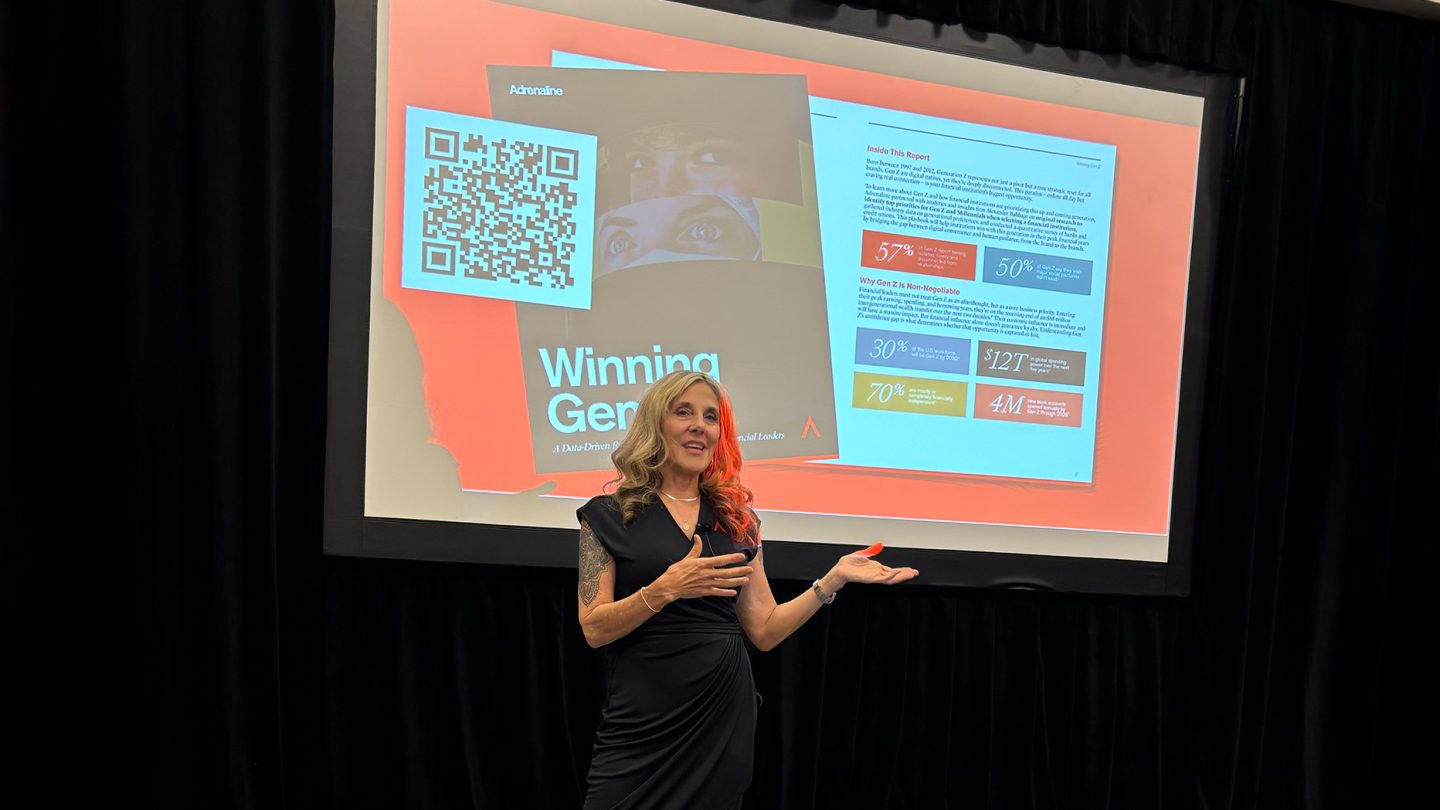
At America’s Credit Unions’ Marketing, PR & Development Conference, Adrenaline’s Chief Experience Officer Juliet D’Ambrosio explored these themes in her session, “Winning Gen Z: How Credit Unions Become the Next Generation’s Choice.” Her presentation focused on how financial institutions can attract and retain Gen Z by delivering a consistent brand experience grounded in community, commitment, and connection. Juliet says focusing on how a brand shows up meaningfully across digital and branch touchpoints influences how Gen Z evaluates and chooses their primary banking relationships.
I was struck by the industry’s optimism. Nearly every credit union we spoke with was in growth mode, and the energy around the future was palpable.”
The presentation’s “Emily” persona brings this tension into full focus, illustrating a generation that is digitally fluent, financially active, and increasingly independent. Yet, Gen Z is still searching for authentic connections and trusted relationships to inform their financial lives. More than half of Gen Z report feeling disconnected, and many express fatigue with the digital platforms that dominate their day-to-day. This contrast between access and fulfillment highlights a critical gap that financial institutions are uniquely positioned to address.
This paradox is particularly relevant in banking, where decisions carry both emotional and practical weight. While digital tools enable speed and convenience, these tools rarely provide Gen Z with the confidence needed to navigate complex financial choices. As a result, younger generations still seek out human consultation at key moments. This reinforces the idea that meaningful connection – not just access – is what drives trust and delivers value.
Confidence Gaps Drive Switching Behavior
Gen Z’s financial behavior reflects strong engagement paired with limited loyalty. While 80% have a primary financial relationship with a bank or credit union, many are willing to switch providers in search of better experiences or greater perceived value. At the same time, this generation often uses multiple platforms for spending and saving, including fintech platforms and digital wallets. This fragmented loyalty signals the need for a more flexible, experience-driven model in banking.
Gen Z’s evolving behavior increases competitive pressure across the industry. Banks and credit unions are no longer evaluated primarily on products, rates, or transactions, but on how effectively institutions deliver relevance, personalization, and guidance. When those elements are missing, relationships become transactional and interchangeable. Conversely, when institutions demonstrate value through meaningful interactions and clear expertise, they create stronger connections with customers and members who will be less likely to switch. That emphasis on connection is increasingly being expressed through powerful brand storytelling.
Storytelling was a consistent theme throughout the conference. Across sessions and conversations, there was a clear focus on authentically sharing how credit unions impact people’s lives – often by letting members tell those stories themselves.”
One of the most important insights from the presentation is the widening gap between the advice Gen Z seeks and the transactional experiences most financial institutions provide. Gen Z frequently turns to social media for advice, yet those sources aren’t always credible. The opportunity for banks and credit unions is in stepping forward with trusted financial advisors who can help translate Gen Z’s complex financial questions into clarity for their lives. To deliver on this opportunity, institutions must make expertise visible, approachable, and embedded within the overall banking experience.
A More Human Path to Growth
Gen Z represents one of the most significant growth opportunities in financial services today, with both immediate and long-term impact. However, capturing that opportunity requires a shift away from heavily digital strategies toward a more balanced, human-centered approach. Institutions that rely solely on convenience and speed risk missing the deeper drivers of trust and loyalty that shape this generation’s decisions. By combining accessibility with authentic human interaction, financial institutions can create experiences that resonate more deeply and endure over time, resulting in relationships that define lasting growth.
There was a strong focus on reaching younger audiences throughout the conference. In nearly every conversation, there was an emphasis on how credit unions can grow relevance with Gen Z & Millennials.”
– Keaton Texeira, Senior Director of Strategy, Adrenaline
To learn more about strategic brand & marketing solutions to reach the next generation of banking consumers, get in touch with Adrenaline’s brand experience experts.
Adrenaline is an end-to-end brand experience company serving the financial industry. We move brands and businesses ahead by delivering on every aspect of their experience across digital and physical channels, from strategy through implementation. Our multi-disciplinary team works with leadership to advise on purpose, position, culture, and retail growth strategies. We create brands people love and engage audiences from employees to customers with story-led design and insights-driven marketing; and we design and build transformative brand experiences across branch networks, leading the construction and implementation of physical spaces that drive business advantage and make the brand experience real.