Branding Archetypes: Signs, Symbols & Themes in Action
How brands communicate their values through their archetypal underpinning
Brand Archetype Examples at a Glance:
From hero to caregiver, every great brand archetype tells a story. Archetypes provide a framework that guides a brand’s identity, messaging, and emotional impact for consumers, helping brands build trust and consistency across every channel.
- Define your brand archetype: Identify the narrative foundation that reflects your brand’s purpose and values
- Express through experience: Align brand voice, visuals, and customer interactions to embody your chosen archetype
- Maintain coherence: Reinforce familiar themes across campaigns to strengthen recognition and trust
Brands that identify and deploy archetypes as part of their branding strategy create more meaningful connections with audiences.
Archetypes in branding – signs, symbols, and themes – offer companies a powerful framework to build trust, clarity, and emotional connection, especially in industries such as banking and finance, which are often seen as complex or impersonal. By aligning with archetypes like the Citizen, Sage, or Ruler, financial institutions can clearly communicate their values, establish authority, and foster lasting customer loyalty.
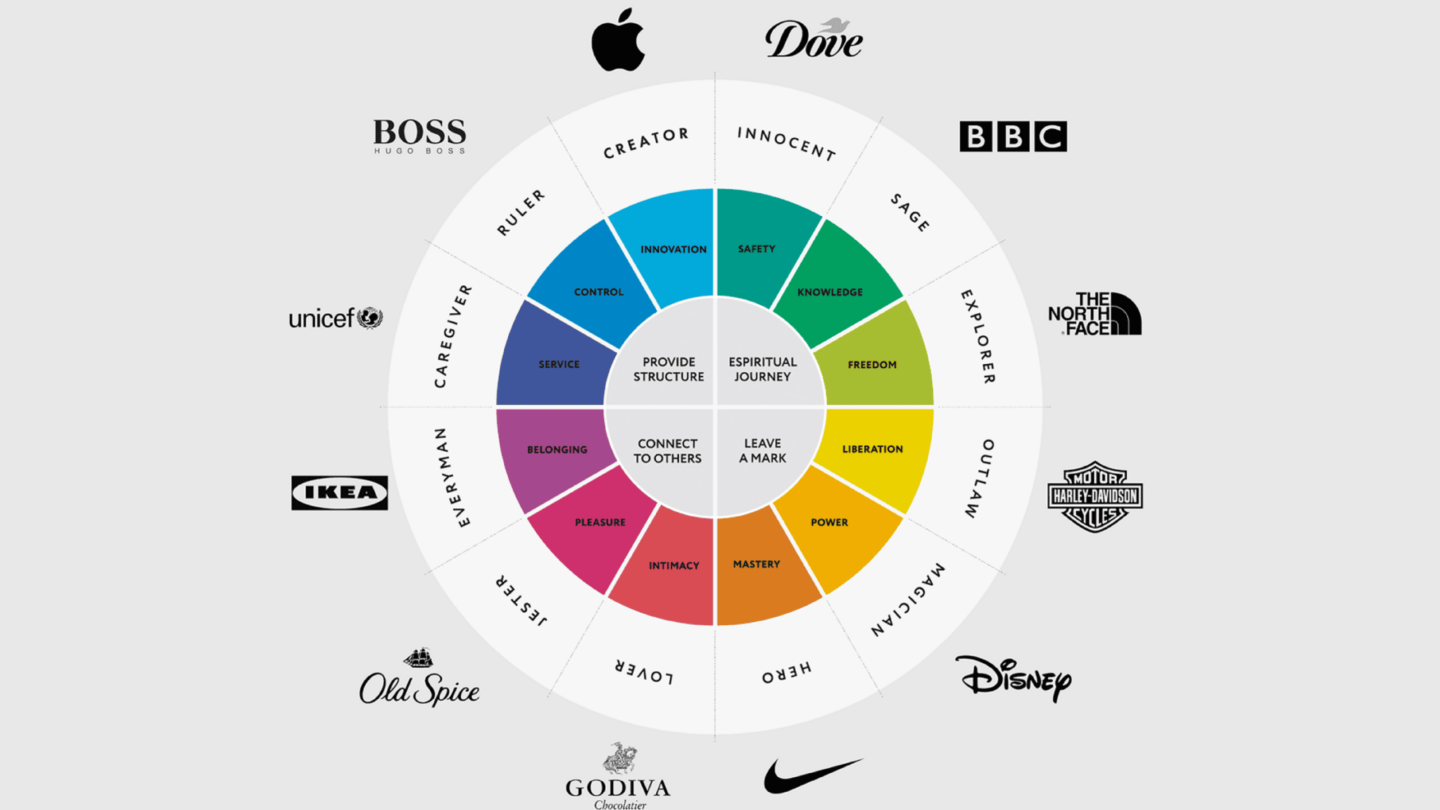
Archetypes represent universal themes that speak to the human experience. From thrill-seekers to homebodies, archetypal motifs are all around us and color the lens through which we see the world. As such, people instinctively recognize and respond to the personas and characteristics at each point on an archetypal wheel.
What if the perception of a brand holds more meaning than just its utilitarian purpose? Can a brand tap into something deeper, more universal in all of us? This is the thesis of Margaret Pott Hartwell and Joshua C. Chen’s “Archetypes in Branding: A Toolkit for Creatives and Strategists,” a workbook that explores how to apply universal themes and symbols — archetypes — to creative strategy. Archetypes, deeply rooted in human psychology, can help brands connect with consumers on a fundamental level. Our practice for comprehending archetypes integrates several models of human understanding, including Maslow’s Hierarchy of Needs, and connects these concepts to the visual representations found in Hartwell and Chen’s work. According to Maslow, once basic physiological needs are met, humans strive for safety, social connection, esteem, and ultimately, self-actualization. Archetypes, then, are an outgrowth of our human experience, offering a framework through which brands can resonate with deeper human desires and emotions.
Exploring Archetypes and Universal Human Meaning
An archetype is a universal symbol, character, or theme that reflects core aspects of the human experience and resonates across cultures and time. Rooted in psychology and mythology, archetypes serve as powerful tools for understanding behavior and emotion — helping brands tap into shared human stories like the hero’s courage, the caregiver’s compassion, or the explorer’s quest for freedom. The renowned psychologist and philosopher Carl Jung believed that external events in our lives can be interpreted as representations of deeper, often unconscious psychological processes happening within us through archetypes. Identifying archetypes within ourselves is the first step in exploring the emotional mind.
For financial institutions, which often struggle to differentiate themselves in a sea of sameness, archetypes in branding offer a way to move beyond functional messaging and forge deeper emotional connections with customers. By aligning with archetypal identities — such as the Ruler to convey stability and control, the Sage to offer trusted guidance, or the Citizen to provide accountability and fairness — financial brands can communicate with authenticity and resonate with customers on a psychological level, building trust and long-term loyalty.
Archetypes in Branding: A Creative and Holistic Approach
Understanding the values a brand shares with its consumers is the crucial first step in aligning those values with specific brand archetypes. For example, if both the brand and its consumers describe it as bold, individualistic, and courageous, it likely aligns with the hero archetype. If the shared values are nurturing, compassionate, and kind, the brand is more likely to fall under the caregiver archetype.
Bridging Psychographics and Archetypes to Build Connections
The way marketers have traditionally learned about and communicated with audiences is to understand them through demographics and psychographics — what age the customer is, what they like, and what motivates them. Psychographics may include personality characteristics, lifestyle, social class, habits, behaviors, and interests, which greatly influence a consumer’s behavior. It’s important to understand those psychographics to develop archetypes — which come from what drives your customers on a more personal level.
Understanding a brand’s audience often relies heavily on data and logic, which can lead to an overly simplified view of consumer behavior. However, brands — especially in the financial sector — can build deeper, more lasting connections by aligning motivation and behavior with powerful storytelling through archetypes. For banks and credit unions, archetypes such as the Citizen (emphasizing accountability and fairness), the Sage (offering wisdom and guidance), and the Hero (positioning themselves as empowering customers to achieve financial goals) are particularly effective. When financial brands successfully embody these archetypes, they resonate on a more emotional and psychological level, fostering trust, loyalty, and advocacy among their customers and members.
Brand Archetypes in Action: Real-World Examples
To illuminate how brands identify, integrate, and exemplify their archetypes, we’ve analyzed five brands. We’ll point to their position on the archetypal wheel, which identifies their overarching theme or premise, and describe their personality and primary characteristics as a brand through their archetype. Finally, we’ll take a look at the practice of the brand as they live and breathe their archetype in the real world.
The Caregiver Archetype, Allstate: Nurturing and Protecting
Personality: The Caregiver is an altruistic nurturer. This archetype is motivated to provide reassurance, service, advice, listening, and an open heart to support the welfare of others. Brands with the Caregiver archetype focus on making their customers feel safe, secure, and valued.
Practice: For Allstate, their logo and tagline, “You’re in good hands,” reinforces this image of an open hand to create a community of support. Given that Allstate is the second largest personal insurer in the U.S., their somewhat parental and protective tone is a natural fit. They want their customers to feel taken care of and to know that when things do go sideways, there is a place of support and guidance to help them find their happy ending.
The Creator Archetype, LEGO: Creating Through Play
Personality: The Creator archetype embodies creativity, imagination, and innovation. They are driven by a need to express themselves and consistently seek new, creative ways to solve problems.
Practice: The Creator has a unique talent for seeing what’s possible. Energy and imagination are at the heart of their perspective. What more perfect archetype for Lego? The brand helps unleash the inherent creativity of children’s play by providing a platform to “Inspire and develop the builders of tomorrow.” Their 2017 “Build the Future” ad campaign, which won three silver Lions at Cannes, featured children constructing their dream careers through Legos.
The Explorer Archetype, Origin Bank
Personality: The Explorer is a brave freedom-seeker. Self-sufficient and independent, this archetype is a bold visionary who values non-conformity and freedom. The Explorer is motivated by a need for new experiences and can be characterized by their adaptability and resourcefulness.
Practice: The Explorer’s attributes of innovation and unique individuality are a perfect fit for Origin Bank. The Origin brand grew out of a need for reinvention, yet stayed true to its core values. The brand’s name, Origin, exemplifies “uniqueness from within” and their advertising campaign “For the Original in You” focused on the individual needs of their customers and how the bank delivered.
The Ruler Archetype, Rolex: Establishing Order and Control
Personality: The Ruler archetype symbolizes leadership, responsibility, and control, striving to create order, stability, and prosperity. This archetype exudes confidence, sets standards, and seeks to influence others through authority and structure.
Practice: Rolex embodies the Ruler archetype through its emphasis on prestige, control, and timeless excellence. The brand conveys authority and success, appealing to those who value status, leadership, and mastery. “A crown for every achievement” conveys a message that a Rolex owner has made it, that they’re successful. With its meticulous craftsmanship and enduring legacy, Rolex projects an image of power, order, and reliability — key traits of the Ruler archetype.
The Sage Archetype, Google: Knowledge and Understanding
Personality: Representing the pursuit of knowledge, wisdom, and enlightenment is the Sage archetype. This archetype is driven by a deep desire to understand the world, question assumptions, and discover truth. Sages are often seen as mentors or guides, using their intellect and insights to help others navigate complex problems or uncover hidden knowledge. The Sage values clarity, deep thinking, and intellectual growth — think about those in education, science, or philosophy.
Practice: Google represents the Sage archetype through its mission to organize the world’s information and make it universally accessible and useful. The brand positions itself as a source of knowledge, insight, and truth, guiding users to learn, discover, and understand. With a focus on clarity, logic, and continuous learning, Google exemplifies the Sage’s pursuit of wisdom and enlightenment.
Applying Archetypes: Inspiring Creativity and Building Authentic Brands
In an industry where services often feel interchangeable and trust is hard-won, financial institutions have a unique opportunity to rise above transactional messaging by embracing archetypes as part of a branding strategy that inspires creativity and builds a more authentic brand. Archetypes allow financial brands to humanize their identities, clarify their purpose, and connect with customers on a deeper emotional level. When banks and credit unions shift toward a story-driven brand that highlights real customer experiences, they are better able to tap into the emotional connections that build trust.
Whether it’s the Ruler offering stability and control, the Sage providing wisdom and guidance, or the Caregiver delivering reassurance and protection, these timeless patterns help financial institutions speak not just to what their customers need, but also to who they are. By integrating archetypes into their branding, financial institutions can foster loyalty, inspire confidence, and build lasting relationships rooted in meaning, not just money.
To learn more about using brand archetypes to successfully position your bank or credit union brand for growth, contact Adrenaline today.